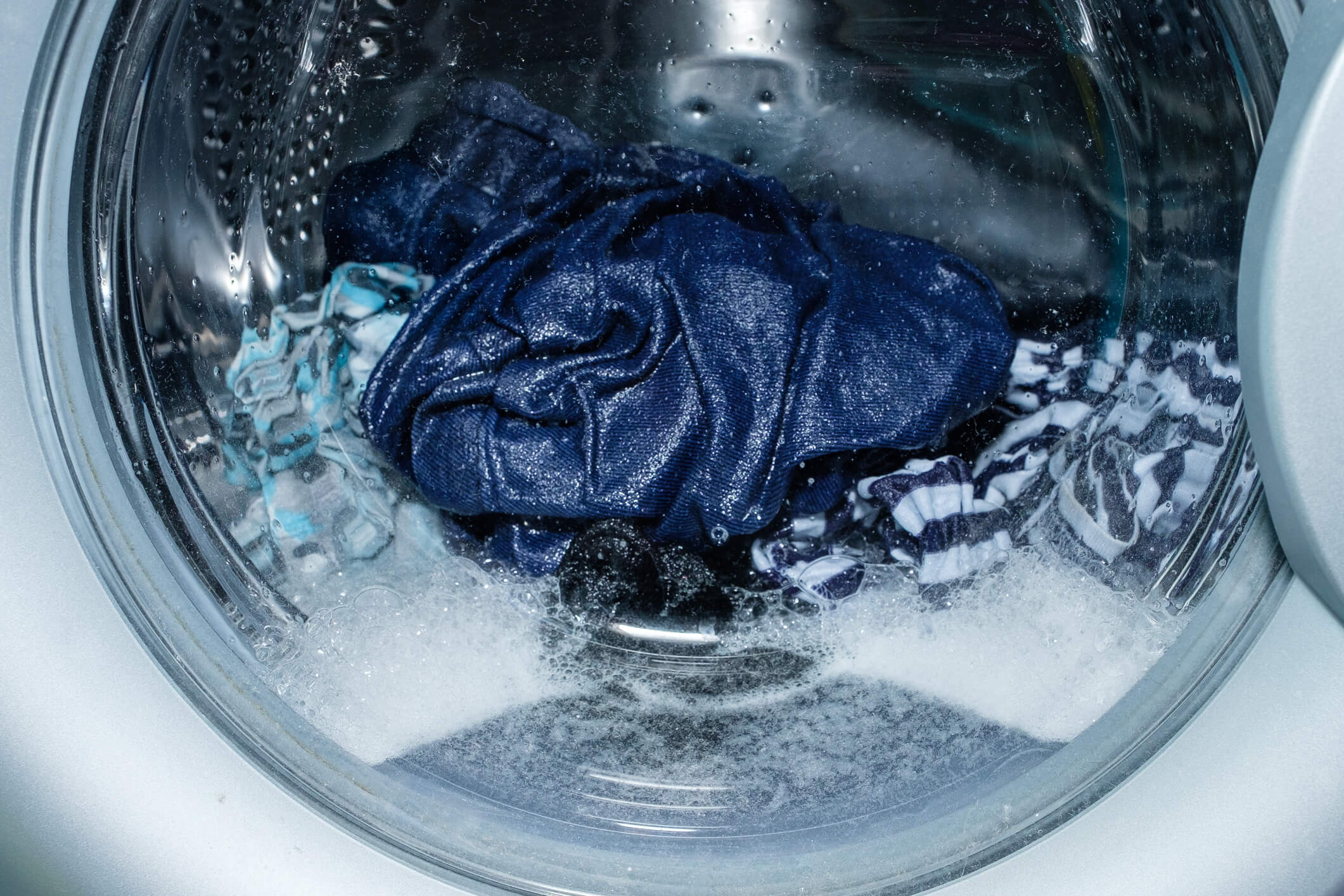
Most washing machines default to the last used cycle, or whatever setting came pre-programmed out of the box. Few people stop to ask if that temperature actually matches what's in the load. The dial gets set once, out of habit, and stays there for years, but your clothes are keeping track.
Dull whites, towels that stop absorbing, stains that never come out, colors that fade fast, these are not random. They're signals your water temperature is working against your laundry instead of for it, whether you wash it yourself or send it to a laundry service. Here are six signs worth watching for, and what each one is telling you.
01 of 06
Whites Look Dull or Gray Instead of Bright
If your white shirts and sheets have picked up a grayish tint that a normal wash won't lift, cold water is often the reason. Most detergents, including the optical brighteners packed into whitening formulas, need warmth to dissolve and activate fully.
Wash on cold too often, and a thin film of undissolved detergent settles into the fabric instead of rinsing clean away. It builds slowly, wash after wash, which is why the dulling seems to appear out of nowhere rather than after one bad load.
Why Rewashing on Hot Doesn't Always Reverse It
One hot wash won't undo months of buildup. By the time whites look gray, residue has worked deep into the fibers, and a single hot cycle only softens some of it. Getting true white back usually takes a separate stripping wash with washing soda or an oxygen booster, then a correctly matched temperature going forward.
02 of 06
Colors Fade Faster Than They Should
Sign one was cold water leaving something behind. Sign two is the opposite problem: heat taking something away. Hot water loosens the bond between dye and fiber, so every wash on a temperature hotter than the garment needs pulls out a little more color. Dark and saturated shades show it fastest, since any dye loss is visible against the deeper base color, while pastels can fade for months before anyone notices.
The Cycle Setting That Quietly Makes It Worse
Temperature isn't acting alone. A heavy-duty or extended cycle paired with warm or hot water adds more agitation on top of the heat, speeding up fading. Two loads at the same temperature can fade at different rates depending on cycle length. If colors are fading fast, check the cycle setting, too, not just the dial.
03 of 06
Towels Feel Rough and Have Stopped Absorbing Water
A towel that used to soak up water in one pass and now just pushes it around isn't worn out, it's coated. Detergent that never fully dissolved in cold water can build up in the loops of the fabric over dozens of washes, sealing them off instead of rinsing free. What feels like rough, thinning terrycloth is often a layer of residue sitting on fibers that are still perfectly intact underneath.
The Fabric Softener Connection
Softener makes this worse. It coats fibers with a waxy layer, which is what makes towels feel fluffy, but that same coating blocks absorption. Pair it with water too cold to rinse it away, and towels lose their whole job fast. Skipping softener on towels, or cutting the dose in half, fixes this quicker than adjusting temperature alone.
04 of 06
Clothes Come Out Smelling Musty Even Right After Washing
This is the sign that catches people off guard, since the load looks and feels clean. Cold water alone doesn't eliminate odor-causing bacteria as effectively as warmer water, especially on heavily worn synthetic fabrics such as workout gear, which trap sweat and bacteria in ways cotton doesn't. A load can come out of the wash technically clean and still carry a smell that a slightly warmer cycle would have prevented in the first place.
Where the Bacteria Actually Come From
Sometimes the smell isn't the clothes; it's the machine. Washers run on cold water consistently, especially front loaders with tight rubber seals, build up bacteria and mildew in the drum and gasket. Every load afterwards picks up a faint trace, regardless of temperature. A monthly hot wash with no clothes, using a machine cleaner or white vinegar, resets it.
05 of 06
A Stain That Was There Before the Wash Is Still There, or Worse
This is the sign with the clearest single cause, and the one most worth remembering on its own. Heat sets protein-based stains – blood, dairy, egg, sweat – into fabric almost instantly, the same way heat sets an egg white in a pan. A stain that could have come out with a cold soak turns permanent the moment it goes through a hot cycle before being properly treated.
The Proper Order of Operations for a Stubborn Stain
- Check the garment before it goes anywhere near the washer, not after.
- Treat the stain with cold water first, working from the back of the fabric to push it out rather than in.
- Apply a stain remover suited to the stain type and let it sit for the time listed on the product.
- Wash on cold, never hot, until you confirm the stain is fully gone.
- Check the item again before drying. Heat from the dryer sets a stain just as permanently as heat from the wash.
06 of 06
Wrinkles Set In and a Normal Iron Won't Release Them
Synthetic heavy loads show this one clearly. High heat during the wash, or the dryer, can set creases into synthetic fibers in a way a natural fiber wrinkle never behaves. The fiber itself changes shape under enough heat, so a normal amount of heat and steam from an iron doesn't relax it back out. It looks like a stubborn wrinkle, but it's closer to a permanent fold.
Why the Dryer Matters as Much as the Washer
Getting the wash temperature right won't help if the dryer runs too hot. Synthetic blends, especially polyester and athletic wear, hold heat-set creases from high dryer heat even when the wash was done correctly. A lower heat setting, or pulling synthetics out while still damp to air-finish, prevents the kind of wrinkle a wash fix alone can't undo.
The Golden Rule: Match Temperature to Fabric and Soil Level, Not Habit
Instead of remembering six symptoms, remember one rule. The best water temperature for laundry is whatever matches what's actually in the load, not the setting you used last time.
- Cold: the right default for most everyday loads. Modern detergents are built to work in cold water, and cold protects color and fabric with no real cleaning tradeoff for normal, lightly soiled laundry.
- Warm: for genuinely soiled items where cold won't fully clean, but full heat risks the fabric. Think kitchen towels, gym clothes, and bedding with regular use.
- Hot: reserved for white cottons, heavily soiled loads, and anything that needs sanitization, such as cleaning rags or bedding after an illness. Not for everyday laundry, and not out of habit.
A Simple Way to Check Before You Push Start
Before starting a load, check two things: the care tag for the fabric's limit, and the load itself for soil level. A cotton towel with normal use calls for warm, not hot, by default. A synthetic with visible stains calls for cold with pretreatment, not a hotter cycle. Matching both, instead of defaulting to memory, keeps the six signs above from starting in the first place.
Washing at the Wrong Temperature? Let Kenny The Kleener Get It Right
Getting the dial right prevents most of this. But buildup, heat-set stains, and worn-out towels usually need more than a setting change to fix.
At Kenny The Kleener, our Wash and Fold Laundry Service has been getting the North Shore's wash right for more than 45 years, matching the correct temperature, detergent, and process to every fabric that comes through our doors. We're proud to be named Illinois State Fabricare Association Dry Cleaner of the Year, and we back that up with same-day service seven days a week and a family-owned team that treats your clothes and home essentials like our own.
If you're looking for a professional laundry service in Evanston, Illinois, that never gets the temperature wrong, bring your next load to Kenny The Kleener. Visit us or get in touch with us at any time.
Address: 3760 Dempster St., Skokie, IL 60076, United States
Phone:+1 847-324-5101