
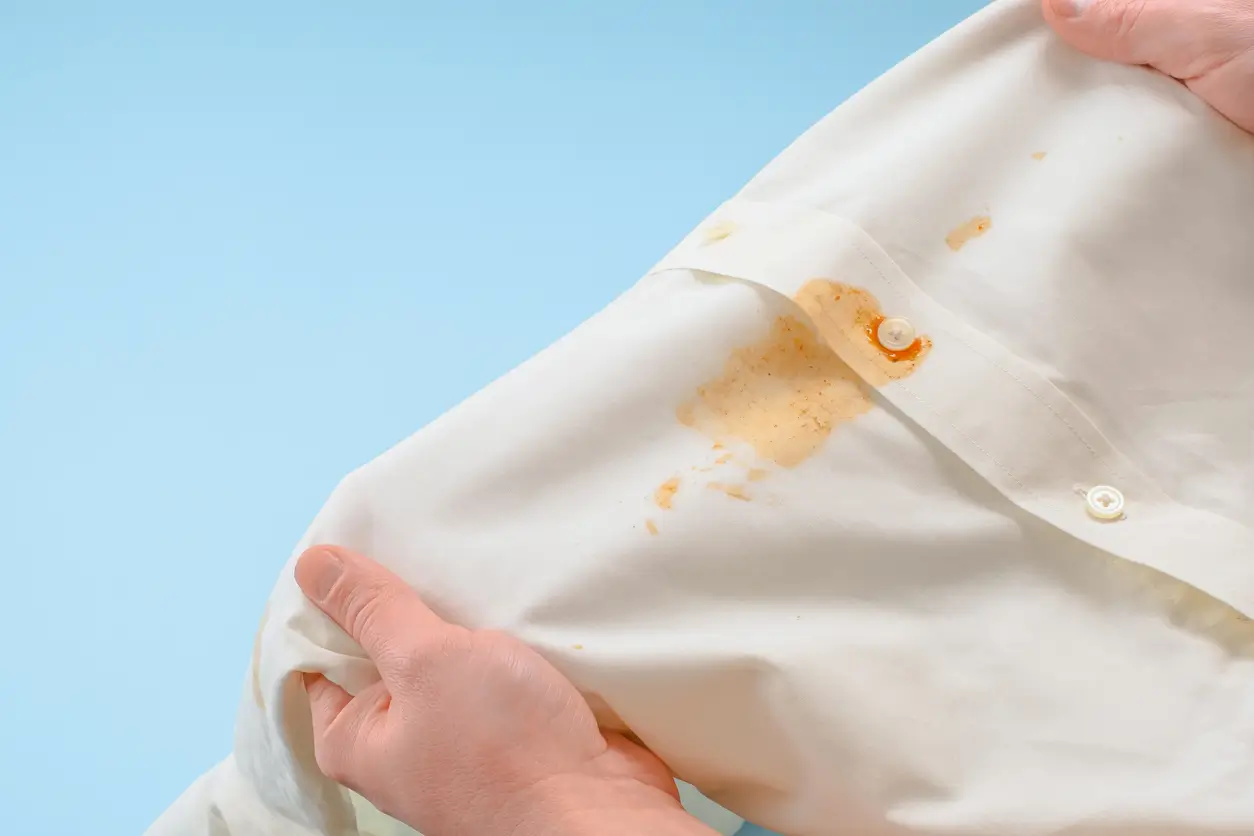
On cotton or polyester, you can be aggressive with stains. Hot water, hard scrubbing, strong detergent – none of it puts the garment at risk. Silk, wool, and beaded formalwear are different. The same tools that save a cotton T-shirt can leave water spots on silk, cause wool to felt, or make embellishments fall off.
So the real question isn't how bad the stain looks. It's how much the fabric can handle. Learning how to remove stains from delicate fabrics means keeping that in mind through every stain type below, since it's the reason some fixes that work everywhere else will damage delicate fabric instead of saving it.
Red Wine, Coffee, and Other Tannin Stains
Tannins are the pigment compounds in red wine, coffee, tea, and dark juices. Silk and wool absorb them fast. Their protein structure bonds to tannin molecules within minutes, so a spill that rinses right out of cotton can leave a lasting mark on silk before you even reach for a towel.
The usual fixes backfire here. Hot water sets the stain instead of lifting it. Salt and club soda are made for carpet and upholstery, and on a tight, delicate weave, they just push moisture and abrasion deeper into fibers that can't take it.
What to actually do:
- Blot, don't rub. Rubbing spreads the pigment and can distort the weave.
- Work from the back of the fabric with a clean, cold, damp cloth.
- Stop there. No bleach, no vinegar, no additional heat.
- Get it to a cleaner as soon as you can, without trying anything else at home.
Why Timing Matters More on Natural Fibers Than Synthetics
A tannin stain can wait a day on polyester with little consequence. On silk or wool, every hour lets the pigment bond deeper into the fiber. Speed matters here more than with most stains, so blotting right away isn't overcaution. It's the difference between removable and permanent.
Oil, Grease, and Salad Dressing Stains
Oil-based stains resist water, which catches most people off guard. Olive oil, butter, salad dressing, and even natural skin oils all repel water-based cleaning. On silk especially, oil bonds with the fabric's own sheen, so dabbing with a wet cloth usually spreads the stain instead of lifting it.
This is one of the clearest cases where professional treatment wins. Dry cleaning solvents break down oil without water, sidestepping the exact problem that makes these stains so hard to shift on delicate fibers. Get it to a cleaner as soon as you can.
Why Blotting With a Napkin Often Makes It Worse
If you must do something in the moment, lay the garment flat with the stained side facing down onto a clean paper towel, and let gravity pull some of the oil downward rather than pressing anything into the fabric.
The instinct to press a napkin against a fresh grease stain is understandable, but on a tight or delicate weave it can push oil further into the fibers rather than absorbing it out.
Sweat, Deodorant, and Perspiration Marks
This is a category most people underestimate because the damage isn't immediate. Sweat combines with aluminum compounds from antiperspirant and natural body oils, and that mixture oxidizes slowly over time. The result is the yellow underarm staining that seems to appear out of nowhere on a garment that looked fine when it went into storage.
Each wash cycle on delicate fabric can make this worse rather than better if the underlying combination isn't fully broken down, which is part of why these marks feel so persistent.
The practical rule: never store a delicate garment while it's sweat-stained, even if you can't see a mark yet. A closet is exactly where invisible perspiration residue turns into visible yellowing three to six months later.
What Makes These Marks Different From Other Stains
Unlike wine or oil, perspiration marks aren't caused by a single substance sitting on top of the fabric. They're the product of an ongoing chemical reaction between sweat, deodorant residue, and oxygen. That's why spot-treating after the mark has already appeared is far less effective than addressing the garment before storage, while the reaction hasn't had time to run its course.
Makeup, Foundation, and Lipstick Transfer
Makeup stains are genuinely harder to treat than most people expect, because makeup itself isn't one substance. It's typically a combination of oils, pigments, and sometimes waxes, all in the same smear. A single home method rarely addresses all three at once. Rubbing spreads the pigment. Water alone does nothing to the oil base. Trying both usually just widens the mark.
This shows up most often on necklines, collars, and blouses, exactly the areas that brush against skin throughout the day.
Why This Category Needs a Multi-Step Approach
Professional pretreatment works because it separates the components instead of attacking them all at once. Solvent breaks down the oil, pigment is lifted separately, and wax residue is addressed separately. That layered approach is why results on makeup stains consistently beat any single home fix.
Ink, Blood, and Other Protein-Based Stains
Ink and blood belong in the same category for a reason that surprises most people: both respond to enzyme-based treatment, and both get dramatically worse with heat. Heat causes the protein bonds in blood and certain ink formulations to set permanently into the fiber. This is exactly why the common instinct to reach for hot water when dealing with a blood stain is the wrong move. Hot water doesn't help here. It locks in the stain.
If you're dealing with either:
- Use cold water only, if you use water at all.
- Never apply heat, including a hair dryer or an iron, before the stain is fully treated.
- Avoid rubbing, which drives the stain deeper into the weave.
The One Mechanism That Sets This Category Apart
Every other stain type in this guide responds to some combination of blotting, solvent, or time. Protein-based stains are unique because the fabric-damaging step isn't the stain itself. It's what happens when heat interacts with it. That single detail is worth remembering even if you forget everything else here: cold water or nothing, and no heat until a professional has treated it.
Old Stains vs. Fresh Stains: What Actually Changes With Time
Most people assume old stains are harder to remove simply because time has passed. On delicate fabric, that's usually not the real reason. What makes them stubborn is that they've often already been treated incorrectly: heat set with a dryer, scrubbed at home, or hit with the wrong solvent before reaching a professional.
A stain left untouched for two weeks can be more removable than one aggressively scrubbed two days ago. Time isn't the enemy. The wrong treatment is the enemy.
How to Tell If a Stain Has Already Been Home Treated
Look for a slightly stiff or shiny patch around the stain's edges, a faint ring outside the original mark, or a spot that looks lighter or bleached compared to the surrounding fabric. Any of these signs means the fabric has already been altered, and it's worth mentioning that history to your cleaner rather than letting them assume it's untouched. That context changes which treatment approach makes sense.
Some Delicates Are Too Precious for DIY Care – Trust Kenny the Kleener
If you've made it this far, you're probably staring at a stain and wondering if cleaning it yourself is still an option. It's not too late, but the next move matters more than the last one.
At Kenny the Kleener, we've specialized in delicate and specialty fabrics for more than 45 years. Our Dry Cleaning Service is built around knowing the difference between a stain that responds to solvent and pigment separation and one that's already been set by heat or hot water. Every garment gets assessed before we treat it, so you'll know what's realistic before we start.
If you are looking for dry cleaning in Skokie, Illinois, our location is ready to assist you. Bring it to us, tell us what you have already tried, and we will take it from there.
Corporate Office: (847) 324 5101
Route Manager, Robert Katz: (312) 330 4275